
Puerto López constituye uno de los enclaves estratégicos más relevantes del perfil costanero ecuatoriano. Para facilitar la experiencia del viajero, detallamos a continuación las alternativas de transporte desde la capital y una selección de las actividades más significativas en la región, optimizando así la gestión del tiempo y la calidad de la visita.
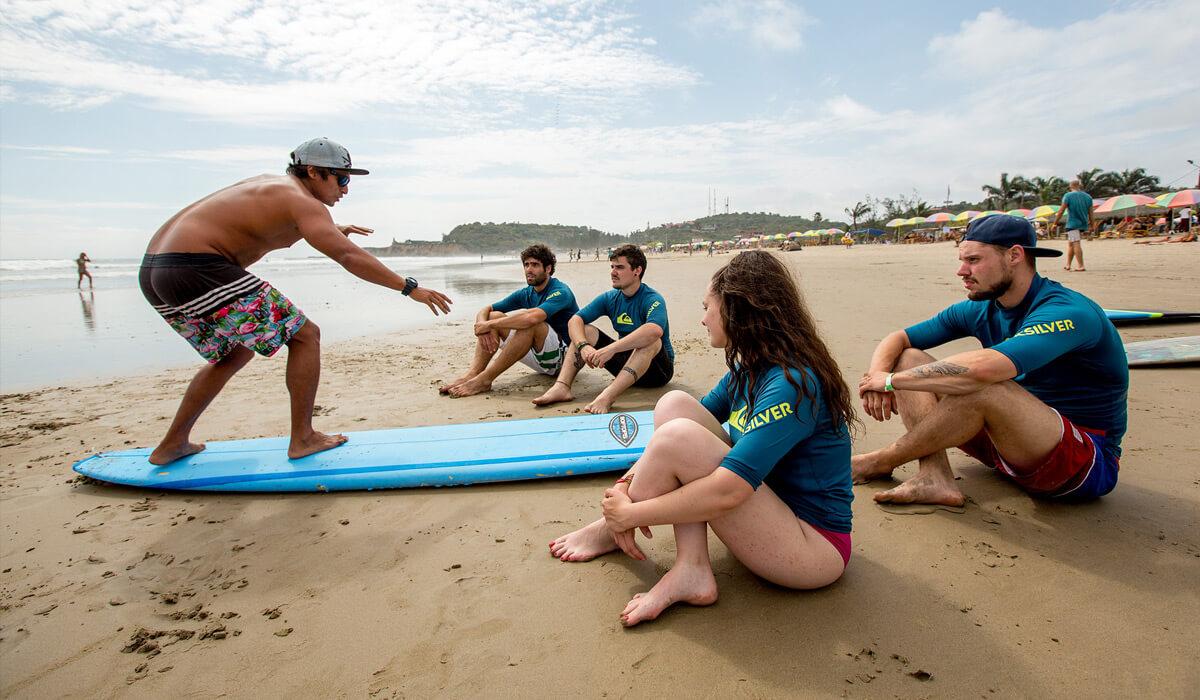
¿Por Qué Visitar Puerto López?
El atractivo principal para los visitantes de Puerto López es, sin duda, el avistamiento de ballenas jorobadas. Esta región del litoral ecuatoriano es reconocida internacionalmente como uno de los destinos predilectos para esta actividad, al constituir un enclave estratégico para el apareamiento y la cría de estos cetáceos tras su migración de 7,000 km desde la Antártida.
Debido a las condiciones biológicas de la zona, los viajeros tienen la oportunidad única de observar no solo ejemplares adultos, sino también crías en sus primeras etapas de desarrollo. Además de su relevancia ecológica, Puerto López ofrece una inmersión en la dinámica cotidiana de la costa ecuatoriana y sirve como un nodo logístico ideal para acceder a diversos destinos de interés en sus proximidades.
¿Cómo llegar desde Quito a Puerto López?
Existen diversas alternativas de movilidad para el trayecto entre Quito y Puerto López.
Transporte Público convencional
Si tiene previsto viajar de Quito a Puerto López en transporte público, deberá dirigirse a la terminal terrestre de Quitumbe, ubicada al sur de la ciudad. Para llegar a Quitumbe, puede tomar un taxi o la línea del Trolebús en dirección sur.
Los autobuses hacia la costa suelen salir por la tarde o noche y viajan durante la madrugada. Esto implica que deberá estar en la terminal en horas de la noche, por lo que se recomienda precaución. Si opta por un taxi, le sugerimos utilizar aplicaciones seguras como Cabify o Uber; el trayecto puede costar entre $10 y $20 USD. Como alternativa puede usar el Trolebús, manteniendo siempre especial cuidado con sus pertenencias.
Una vez en Quitumbe, encontrará autobuses regulares con destino a la provincia de Manabí. Puerto López se encuentra a unos 490 km de Quito y las rutas principales incluyen los trayectos vía Latacunga-Quevedo (8 horas), vía Santo Domingo (8 horas) o la ruta Latacunga-Riobamba-Guayaquil (9 a 10 horas).
La mayor ventaja de este servicio es el costo: el pasaje a Puerto López es de aproximadamente $9 USD, lo que equivale a un dólar por hora de viaje. Para obtener los boletos, le recomendamos consultar los horarios actualizados en su hostal, ya que la comunicación telefónica directa con las cooperativas suele ser difícil. Asegúrese de salir hacia la terminal con suficiente antelación (al menos una hora dependiendo del tráfico) y considere una hora adicional por seguridad.
Wanderbus Ecuador
Como alternativa, puede optar por trasladarse a Puerto López con Wanderbus. Varios de nuestros pases incluyen esta parada en su itinerario; también puede adquirir el Wanderpass, el cual le permite viajar desde Quito hacia los destinos más destacados del Ecuador, incluyendo Puerto López.
El Wanderbus cuenta con salidas regulares desde Quito y otras ciudades, operando desde puntos de encuentro estratégicos y convenientes. Esta es una opción considerablemente más segura para viajar hacia la región costera y a través del país.
Vuelos Nacionales
Una opción de mayor costo, pero más conveniente, es volar desde Quito hacia Manta o Guayaquil y completar el trayecto a Puerto López en auto privado o autobús. Puede consultar sitios como LATAM o Despegar.com para encontrar ofertas en vuelos.
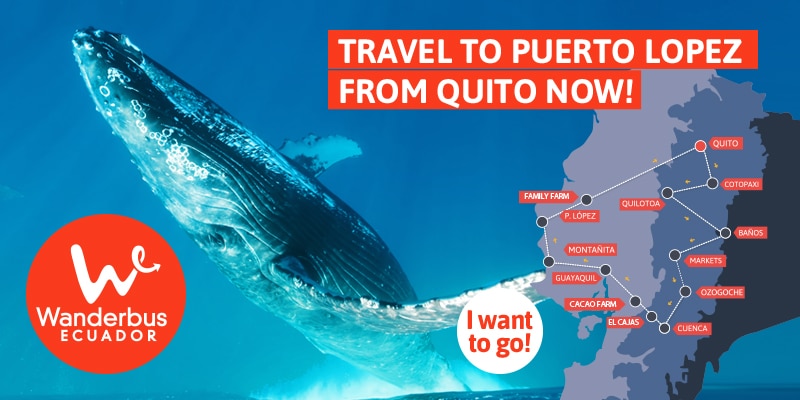
Experiencias destacadas en Puerto López y sus alrededores
Explore la diversidad de experiencias y atractivos que ofrece Puerto López.
Whale watching in Puerto López
Como se mencionó anteriormente, la observación de ballenas es la actividad referencial de Puerto López. La temporada óptima para el avistamiento de cetáceos se extiende desde junio hasta octubre.
Al arribar a Puerto López, los visitantes pueden consultar directamente con las diversas operadoras locales que ofrecen excursiones de avistamiento, o verificar calificaciones y referencias en plataformas especializadas como Tripadvisor. Es común que las agencias integren servicios adicionales en sus paquetes, tales como sesiones de snorkeling o buceo.
Hauling in the catch – Morning fish market in Puerto López
One exciting activity that takes place every day in Puerto López and doesn’t cost a cent is to rise early and watch the fishermen come in with their catch. The south part of the beach essentially turns into an outdoor fish market and it’s all quite the spectacle. Sharks, rays and other marine life (the legality of some of this is questionable) are hauled in, cleaned and sold fresh, often loaded into trucks and taken to cities in the interior of the country. Meanwhile, pelicans, frigates, boobies and cormorants hover nearby to snatch the stray fish or entrails.
It’s very likely that any seafood you’ll eat that day will be fresh from the boat!
Beach life, night life
While the town of Puerto López may not look like much, it is a strategic place to stay if you want to visit the surrounding area and also experience real Ecuadorian coastal life. During the day, you’ll likely be on various whale watching or snorkeling tours, but at night there are a few places in town to have fun, although keep in mind that nightlife here will not compare to nightlife in Montañita.
Along the boardwalk, or “malecón”, you’ll find a number of pop up beach bars where you can order a fresh Piña Coladas or smoothie. If you’re looking to dance, there are a couple of bars, including one called Wett which offers salsa classes.
Things to do around Puerto López
There are also several interesting things to do around Puerto López, don’t miss them!
Machalilla National Park
Covering an area of 750 km2 (290 mi2), Machalilla National Park is Ecuador’s largest protected area along the coast and a gem for locals and tourists alike. Within it, you’ll find a number of inspiring spots to explore.
Los Frailes beach
Anyone visiting this area of Ecuador must spend a day in Los Frailes. This immaculate, white sand beach is actually a short string of beaches that are representative of what the entire coastal area once looked like, before human intervention.
To get to Los Frailes, you can either take a bus, taxi or moto taxi from Puerto López to the entrance of the park. The entrance is free of charge but you’ll be asked to show official ID for registration purposes. Between the entrance and the beach itself you can either walk (30 mins) or continue on with a taxi or mototaxi. Keep in mind, you won’t be allowed on the beach if you’re bringing any glass bottles or alcohol. Snacks are permitted, but make sure you don’t litter on the beach and keep all the trash on you until you leave.
The “Poor Man’s Galápagos” or Isla de la Plata
There’s nothing wrong with traveling on a budget! Not everyone will be able to afford a week-long stay on the Galápagos Islands and, for that reason, the Isla de la Plata (Silver Island, in English) is a highly recommended alternative.
As noted in Lonely Planet, this name came about due to a legend that Sir Francis Drake – an English explorer – who is said to have buried a chestful of silver there in the sixteenth century. Silver that has never been discovered.
Located within Machalilla National Park, Isla de la Plata offers visitors a diversity of marine species, including many that you might see while visiting the Galápagos Islands. These include: various species of boobies, including the blue-footed boobie; sea lions; and hundreds of fish species that can be spotted while snorkeling or diving.
Tours to visit the Isla de la Plata can be found in Puerto López. Many of these include snorkeling and a guided hike along the island’s trails.
Agua Blanca museum and lagoon
Also located within Machalilla National Park is Agua Blanca, a local community project that gives visitors the opportunity to learn about the area’s history and bathe in a sulfuric lagoon known for its medicinal properties.
In Agua Blanca, after paying a $5 entrance fee per person, you’ll get a 40 minute guided tour of the museum and archaeological site. The tour is in Spanish but is still worth your while. At the end of the tour, you’ll reach a lagoon that has natural sulfur. For the full spa treatment, you can choose to apply mud to your body, let it dry, and then rinse it off in the lagoon. You’ll find that your skin is unbelievably soft afterwards!
San Sebastián
San Sebastián is a beautiful area located southeast of Agua Blanca where tourists can hike and spot local wildlife, like the black howler monkey and the guanta (lowland paca, a small rodent). The entire hike is around 20 km (12.4 miles) long and can be done by mule, if you’re not sure you’ll make it on foot!
To enter this area, you’ll need to hire a local guide, which you can find in Puerto López or Agua Blanca.
The trail through San Sebastián rises to 600 km and gets quite humid. Bring plenty of mosquito repellent, long trousers and long-sleeved shirts. You’ll have a chance to cool off during the hike in a small waterfall too!
Isla Salango
Another island located within the perimeter of Machalilla National Park is Isla Salango. While not as popular as Isla de la Plata, Isla Salango is another wonderful spot to snorkel, scuba dive and enjoy a clean, white sand beach.
Meanwhile, on the mainland, the town of Salango has a rich history and is considered a ceremonial center for six pre-columbian cultures over the last 5,000 years, including the Valdivia, Machalilla, Chorrera-Engoroy, Bahía, Guangala, and Manteña cultures. The Salango archaeological museum gives visitors a chance to see one-of-a-kind ceremonial artefacts belonging to these cultures.
Ayampe
Around 25 minutes south of Puerto López lies Ayampe, a sleepy surfer town that has become increasingly popular over the last five years. While still a relaxed and quiet place to enjoy the beach, Ayampe offers tourists a number of comfortable and affordable hostals and restaurants to eat and dine at and is especially pleasant if you and your partner are looking for a romantic getaway during your trip to Ecuador.
While in Ayampe, you can do a number of outdoor activities, including surf lessons, hiking trails, horseback riding, paragliding and more. Keep in mind, there are no ATMs in town so withdraw enough cash while in Puerto López.
To get to Ayampe, grab a public bus, shared or private taxi, or even hitchhike from Puerto López.
Best time to visit Puerto López
The best time to visit Puerto López is between August and October, which also happens to be the end of the whale watching season. Tourism increases between June and August and peaks in July, so if you want to avoid the crowds, consider visiting Puerto López between August and October.
The temperature in Puerto López doesn’t vary too much and the area is significantly drier than the northern coast of Ecuador. It fluctuates around 23 – 28 C(74 – 82 F) with the hottest months of the year between February and April when temperatures rise to 30 C (86 F).
Best places to eat in and around Puerto López
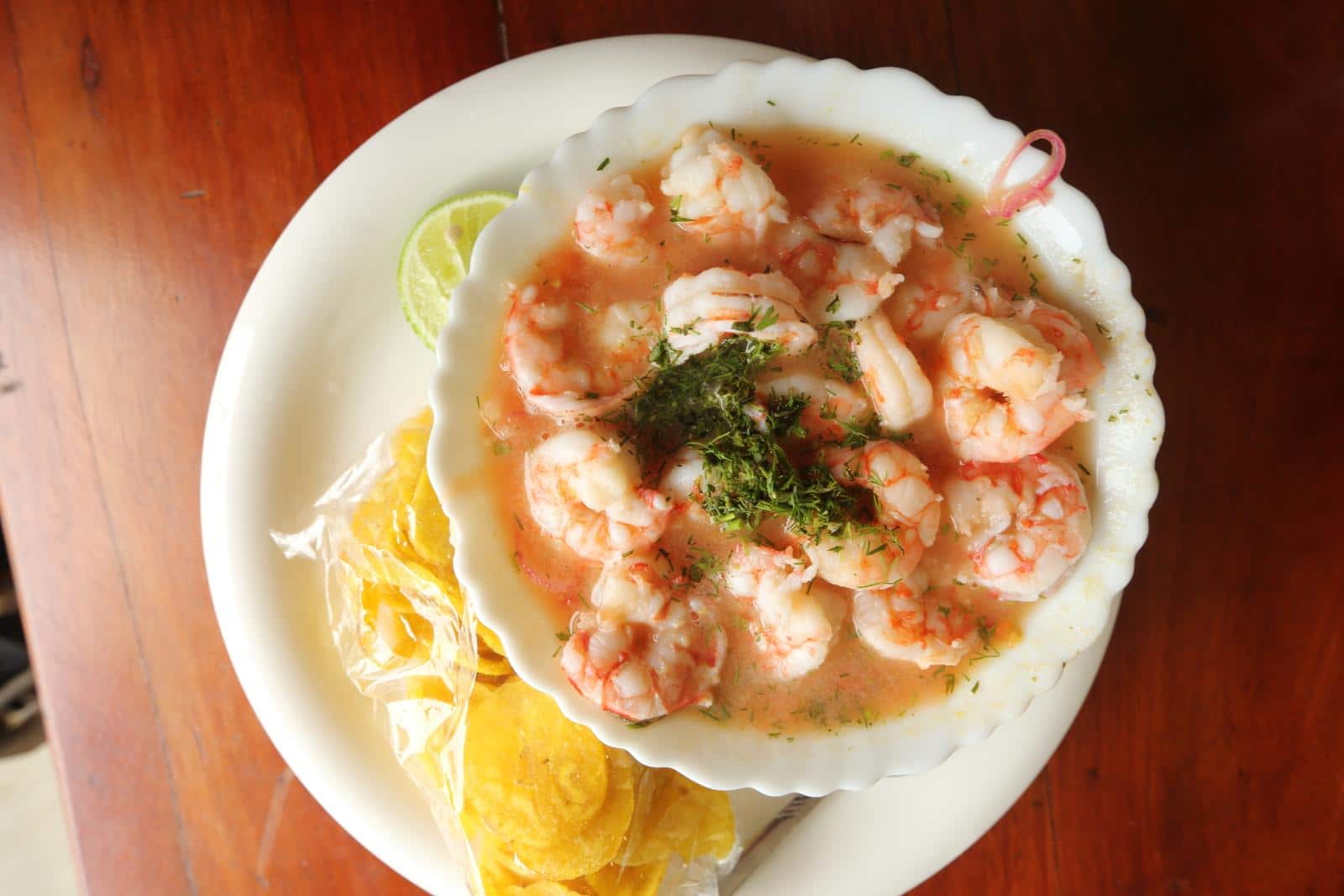
One of the best places to eat in the area is at Restaurante de Jimmy, a small surf restaurant located north of Ayampe and before the town of Puerto Rico. You’ll find a number of local dishes made of fresh seafood often with a delicious peanut sauce, popular in this region of Ecuador. Shrimp, fish or octopus ceviche is also especially good here!
In Salango, the Delfin Mágico is a restaurant made popular for its delicious seafood. If you haven’t yet tried scallops in a garlic sauce (“al ajillo”), now’s your chance!
Puerto López map
The distance from Quito to Puerto López is 490 km (304 mi), which is roughly an 8 hour drive. From Guayaquil, it’s 195 km (121 mi), roughly a 3 and a half hour drive. For your reference, we’ve included a map below that indicates some of the locations listed in this blog.
Are you ready to start exploring Ecuador’s Manabí coastline? Before you book any tickets, check out our Wanderbus passes for a safer and more flexible way to travel.
V